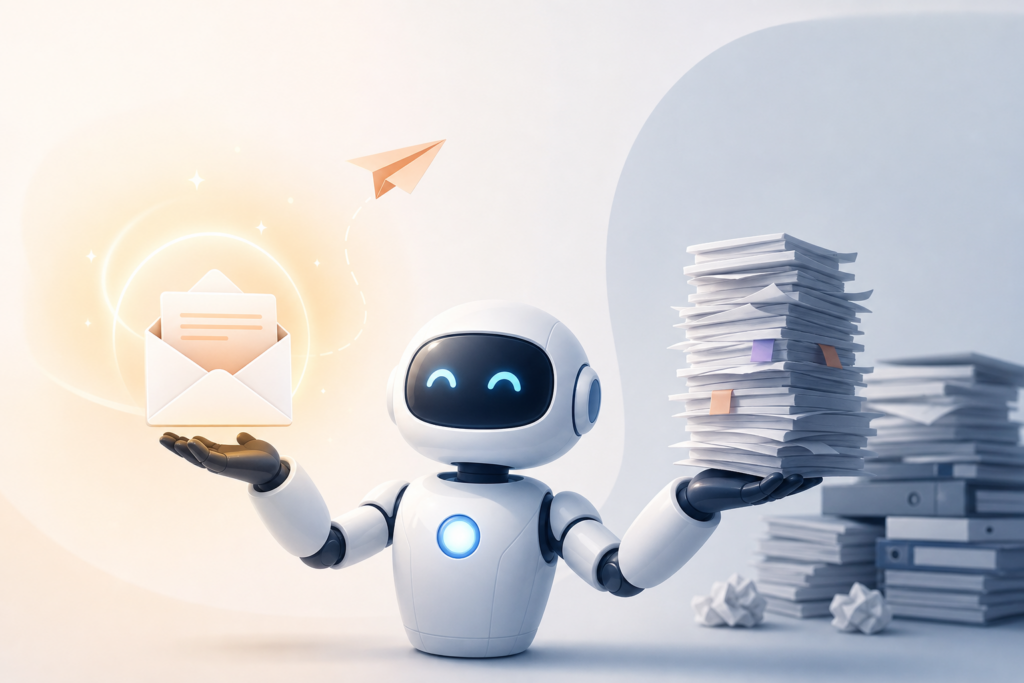
If you’ve used ChatGPT or Claude to draft emails, you’ve probably noticed they’re surprisingly good at it. But ask the same model to write a 10-page report, and the quality nosedives halfway through. This isn’t random—it’s baked into how these models work.
Understanding why AI excels at some writing tasks but fumbles others will save you hours of frustration and help you use these tools where they actually shine.
The Structure Problem: Emails Have Clear Patterns
Email follows predictable templates. There’s a greeting, a purpose statement, maybe a few bullet points, and a sign-off. AI models have seen millions of emails in their training data, and they’ve learned these patterns cold.
When you ask Claude to write a professional follow-up email, it knows exactly what that looks like: acknowledge the previous conversation, state your ask clearly, provide context if needed, close politely. The model doesn’t need to invent structure—it’s retrieving and adapting a well-worn pattern.
Long documents are different. A 10-page strategy memo doesn’t follow one universal template. The structure depends on your specific argument, audience, and goals. AI models struggle to maintain a coherent through-line across thousands of words because they’re predicting one chunk at a time, not architecting a complete argument.
The Context Window Cliff
Every AI model has a context window—the amount of text it can “see” at once. Even with today’s extended windows (Claude can handle 200,000 tokens, ChatGPT around 128,000), the model doesn’t weigh all that context equally.
Recent research shows that models pay more attention to the beginning and end of their context window. The middle gets fuzzy. When you’re writing a short email, everything fits in the high-attention zone. When you’re 5,000 words into a report, the model has partially “forgotten” the thesis you stated at the top.
That’s why AI-generated long documents often repeat themselves, contradict earlier sections, or drift off-topic. The model isn’t tracking the big picture the way a human writer would by rereading and revising.
The Scope Sweet Spot
AI writing quality peaks when the task has clear constraints and a narrow scope. An email asking for a meeting extension: perfect. A three-paragraph product description: great. A nuanced 15-page analysis comparing three strategic options: messy.
This isn’t about word count alone—it’s about complexity and coherence. A 500-word email can be more complex than a 2,000-word blog post if it requires balancing multiple stakeholders’ concerns and implicit political context. But generally, shorter and more formulaic wins.
Here’s what works well:
- Email drafts (replies, cold outreach, internal updates)
- Social media posts and captions
- Product descriptions and landing page copy
- Meeting agendas and summaries
- Short blog posts or articles with a single clear point
Here’s what doesn’t:
- Long-form reports requiring a sustained argument
- White papers with multiple interdependent sections
- Anything requiring deep subject-matter expertise the model wasn’t trained on
- Documents where tone and voice need to stay consistent across many pages
How to Actually Use This
Don’t fight the tool. If you need a long document, break it into email-sized chunks and prompt for each section separately. Write the outline yourself—that’s the high-level thinking AI genuinely can’t do well—then use the model to draft individual sections based on your structure.
For emails, lean in. Give the model context (who you’re writing to, what you need, any relevant background), specify tone (formal, casual, apologetic), and let it run. You’ll spend more time editing a AI-drafted report than writing it yourself, but a well-prompted email draft is often ready to send with minimal tweaks.
The dirty secret of AI writing tools in 2026: they’re better assistants than authors. They excel at filling in predictable patterns, not at sustaining original thinking across thousands of words. Use them for the former, and you’ll wonder how you ever managed your inbox without them.
Want one useful AI insight like this in your inbox every day? Subscribe to the One Two Three AI newsletter and actually keep up with what matters.