
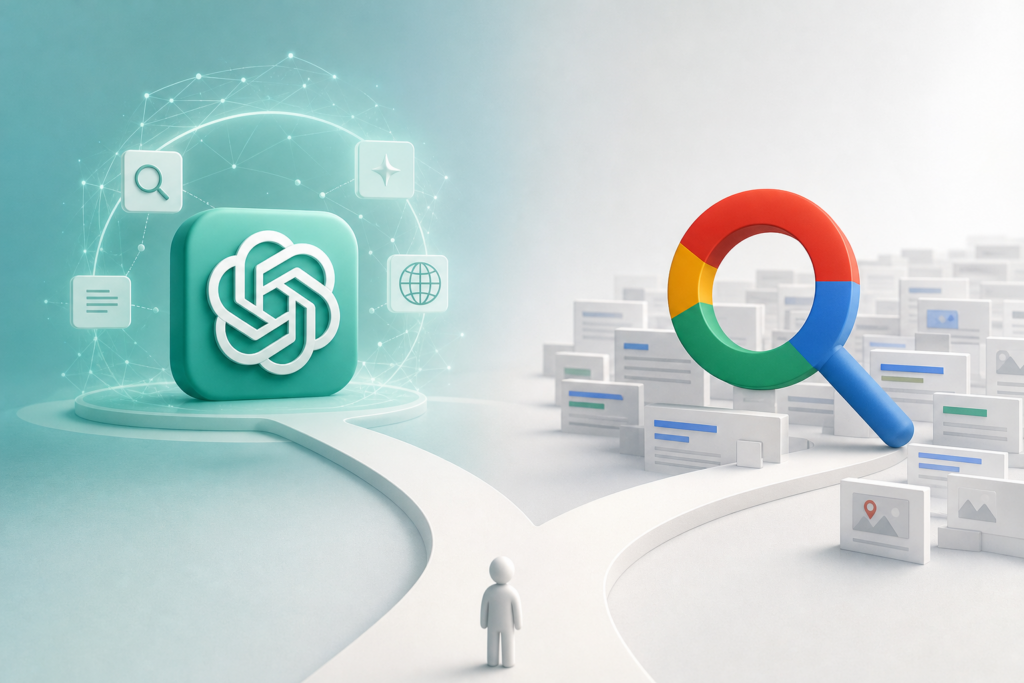
OpenAI integrated real-time web search directly into ChatGPT, letting the model pull current information from the internet instead of relying solely on its training data. If you’ve been using ChatGPT and suddenly noticed it citing sources and referencing yesterday’s news, this is why.
The shift changes how ChatGPT handles questions that need up-to-date answers. Instead of saying “my knowledge cutoff is April 2023,” it now searches the web when appropriate and synthesizes what it finds. But it’s not just Google in a chat interface—the mechanics and user experience are meaningfully different.
How ChatGPT Search Actually Works
When you ask ChatGPT a question that benefits from current data—stock prices, recent events, weather, today’s news—it automatically decides whether to search the web. You’ll see small citations appear next to relevant parts of the answer, linking to sources.
The model reads multiple pages, extracts key information, and writes a coherent answer rather than presenting ten blue links. You’re not clicking through search results; you’re getting a synthesized response with inline citations you can verify if you want.
You can also force a search by clicking the search icon in the prompt box, or disable it if you prefer ChatGPT to work only from its training data.
What It Does Better Than Google
ChatGPT Search excels when you need information stitched together from multiple sources. Ask “what are critics saying about the new iPad Air?” and it pulls quotes from several reviews, summarizes the consensus, and highlights points of disagreement—all in one readable answer.
It’s also better at handling vague or conversational queries. Google rewards precise keywords; ChatGPT interprets intent. “Is it supposed to rain this weekend in Portland?” works without specifying which Portland or reformulating your question into search-engine syntax.
For research tasks—comparing products, summarizing news on a topic, or gathering background on something unfamiliar—ChatGPT saves you the work of opening tabs and synthesizing information yourself.
Where Google Still Wins
Google remains faster for simple lookups. If you just need a phone number, store hours, or a quick fact, typing into Google and seeing the answer in a knowledge panel beats waiting for ChatGPT to generate a response.
Google is also better at surfacing a diversity of sources. ChatGPT chooses what to include and what to ignore; you don’t see the ten other perspectives that didn’t make it into the answer. If you want to browse options or explore different viewpoints, traditional search results give you more control.
And for local information—restaurants, directions, business listings—Google’s integration with Maps and its local data infrastructure is unmatched. ChatGPT can tell you what’s nearby, but it won’t show you on a map or give you turn-by-turn directions.
When to Use Which
Use ChatGPT Search when you need synthesis, explanation, or multi-step research. It’s ideal for questions like:
- “What’s the current state of AI regulation in the EU?”
- “Compare the specs of the latest flagship phones from Samsung and Apple”
- “What happened in the tech industry this week?”
Use Google when you need speed, local results, or want to see a range of sources before deciding what to trust. It’s still the tool for:
- Finding a specific website or document
- Looking up store hours or addresses
- Quick fact checks where you want the source immediately visible
The two tools aren’t direct replacements. ChatGPT Search changes the interface from retrieval to conversation, which is powerful for some tasks and overkill for others. Knowing which question suits which tool saves time and frustration.
Want one useful AI idea in your inbox every day? Subscribe to the One Two Three AI newsletter and stay sharp on what actually works in artificial intelligence.